





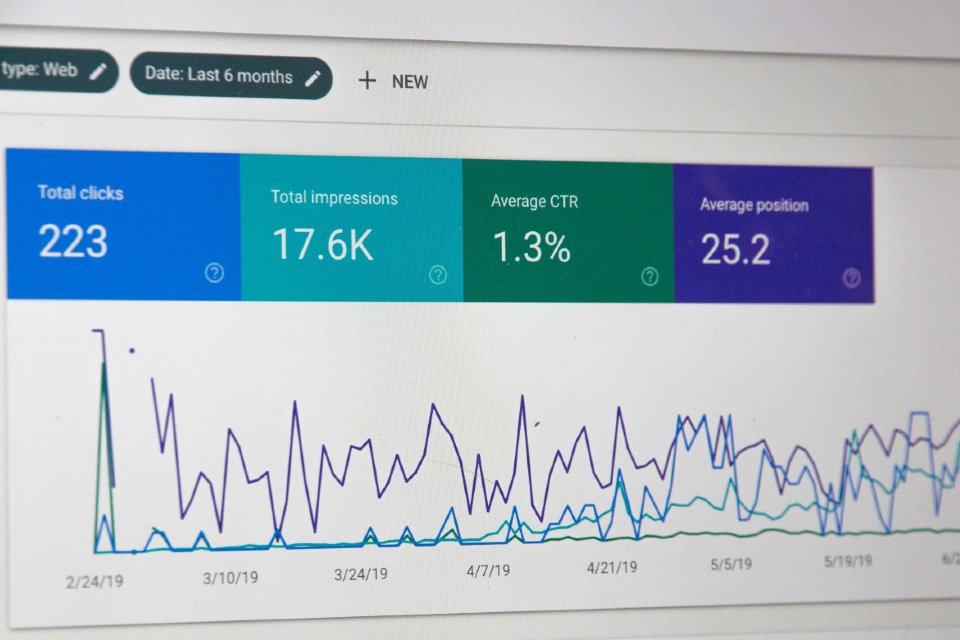
Pay-per-click advertising can put an online retailer in front of customers at precisely the moment they are looking for a product. But reaching somebody who wants to buy is not the same as acquiring a profitable customer…
A campaign might deliver impressive click-through rates, increasing sales and an apparently healthy return on ad spend (ROAS), yet still produce disappointing commercial results once product margins, delivery costs, returns and acquisition expenses are considered.
That is becoming particularly important as PPC management moves further towards automated bidding, AI-driven targeting and campaigns operating across multiple advertising channels.
Google’s Performance Max campaigns, for example, use AI to optimise advertising across Google’s inventory, with conversion values and bidding objectives helping to determine where expenditure goes.
For eCommerce decision-makers, this creates a useful starting question: Are we buying traffic, revenue or profitable growth?
The answer should shape the choice of PPC partner, platforms, measurement systems and campaign strategy.
Start with Commercial Objectives
Before comparing agencies or advertising platforms, retailers should establish what paid advertising needs to achieve.
An established retailer might want to acquire new customers, while another may prioritise repeat purchasing, profitable growth in specific product categories or expansion into new geographical markets.
Those objectives can require different strategies.
A business focused on customer acquisition may accept a higher initial acquisition cost where customer lifetime value supports it. A retailer with tighter margins may need to prioritise products offering a more immediate contribution to profitability.
Agencies such as 26PMX, CTI Digital and Eskimoz offer performance marketing services spanning paid search and wider digital advertising, but the important comparison is how each provider would translate a retailer’s commercial objectives into campaign decisions.
The starting point should not be the advertising budget. It should be what that budget is expected to deliver.
Understand the PPC Channel Mix
PPC is often used interchangeably with Google Ads, but paid acquisition encompasses several different formats and platforms.
Search campaigns can reach people expressing intent through particular queries. Shopping advertising presents product information directly within search experiences. Performance Max combines advertising opportunities across Google channels through an automated, goal-based campaign approach.
Retail media and marketplace advertising can also play a significant role for brands selling through third-party platforms.
26PMX provides paid search, Shopping, marketplace advertising and wider paid media services, while Eskimoz combines PPC with retail media, SEO and analytics.
The objective is not to advertise everywhere. It is to identify where relevant demand exists and which channels can reach it economically.
Compare PPC Agencies on More Than Platform Expertise
Google Ads experience matters, but campaign management is only part of the requirement.
An effective eCommerce PPC partner should understand product economics, customer behaviour, website performance, attribution and the wider retail trading calendar.
Buyers should establish whether the prospective agency will provide strategic planning, day-to-day optimisation, creative development, product-feed management, reporting and technical support.
They should also understand which services are delivered internally and whether specialist partners are required.
CTI Digital, for example, combines paid search with technical and eCommerce expertise, including product-feed management. Magebit similarly offers paid advertising alongside eCommerce development and conversion-rate optimisation.
That combination can matter where poor campaign performance is partly caused by problems beyond the advertising account.
Look Beyond ROAS
ROAS is a useful measure of advertising efficiency, comparing attributed revenue with advertising expenditure. But it does not reveal how much profit the retailer earns. Consider two products.
One generates a high ROAS but has a relatively low margin and expensive fulfilment requirements. Another generates a lower ROAS but contributes more profit after product and delivery costs.
If campaigns are optimised purely for attributed revenue, advertising expenditure may favour the wrong products.
Google’s own Performance Max guidance encourages retailers to use transaction-specific conversion values and consider product margins and customer lifetime value when setting targets.
Retailers should therefore ask prospective PPC partners how they incorporate commercial information into campaign optimisation.
The strongest ROAS is not necessarily the strongest business result.
Treat Product Feeds as a Performance Asset
For retailers running Shopping and Performance Max campaigns, the product feed is a fundamental component of advertising performance.
Product titles, descriptions, categories, images, pricing, availability and other attributes help advertising platforms understand what is being sold.
Poor-quality product data can limit visibility, create mismatches between adverts and landing pages or send shoppers towards unsuitable products.
Google recommends improving Merchant Center product information and using feed attributes such as custom labels to identify high-priority products or categories.
CTI Digital provides Shopping feed management and product segmentation capabilities, while specialist eCommerce technology providers such as Magebit and On Tap can support the underlying commerce platforms and integrations.
Buyers should establish who will own feed quality, how errors will be identified and how product data will be updated when prices, stock or promotions change.
A strong bidding strategy cannot fully compensate for unreliable product information.
Examine the Landing Page Experience
PPC performance does not end when somebody clicks an advert.
If the destination page is slow, confusing or inconsistent with the advertisement, acquisition expenditure can quickly be wasted.
A product advertised at a particular price should be easy to find at that price. Relevant delivery information should be accessible, product availability should be accurate and the route to checkout should be straightforward.
This is where paid media and eCommerce development need to work together.
Magebit and CTI Digital offer capabilities extending beyond advertising into website performance and conversion optimisation, while Dotsquares provides digital marketing alongside web and eCommerce development.
SOZO Design brings website design, user experience and wider digital expertise that may be relevant where landing-page quality or customer journeys need attention.
The practical question is whether the agency can identify and help resolve problems occurring after the click.
Make Conversion Tracking Reliable
Automated advertising increasingly depends on the quality of the conversion information supplied to advertising platforms.
Retailers need to ensure that purchases are recorded accurately, transaction values are correct and duplicate or irrelevant conversions are not distorting campaign results.
Google’s enhanced conversions functionality can improve measurement using securely hashed first-party data, subject to appropriate data-protection controls.
But better technology does not remove the need for governance.
The Information Commissioner’s Office (ICO) states that storage and access technologies used for online advertising generally require consent, including technologies used for advertising measurement.
Retailers should therefore assess both the accuracy and legality of their measurement arrangements.
An agency promising sophisticated AI optimisation should be able to explain what information those systems will use and how that information is obtained.
Consider How Automation Is Governed
Automation can help advertisers manage complex campaigns, analyse signals and optimise bidding at a scale that would be difficult manually.
However, giving advertising platforms more decision-making responsibility makes campaign objectives and data quality increasingly important.
Retailers should ask how agencies monitor automated campaigns, investigate unexpected changes and prevent budgets being directed towards activity that does not support commercial priorities.
Human oversight remains necessary.
A campaign can be delivering exactly the result an algorithm has been instructed to optimise while still failing to meet the retailer’s broader business objective.
The question is not simply whether an agency uses AI. It is whether the agency knows when to challenge the decisions automation is making.
Assess International PPC Capability
Retailers expanding beyond the UK need to understand how search behaviour, competition, language and customer expectations vary between markets.
Translating an existing advert may not be sufficient. International campaigns may require different keywords, messaging, landing pages, delivery propositions and commercial targets.
ICS-digital provides international PPC and paid media services, including market research and multilingual campaign development. Eskimoz also offers international paid search supported by local market expertise.
For buyers, the important distinction is between managing campaigns across several countries and genuinely adapting those campaigns to each market.
Check Reporting and Account Ownership
Retailers should expect meaningful reporting and transparency over how their advertising investment is managed.
At a minimum, reporting should connect expenditure with revenue, acquisition costs and performance against agreed objectives.
Where possible, it should also identify performance across product categories, customer groups and campaigns.
Ecommerce Intelligence and Alchemy Network are among the digital commerce and marketing businesses buyers may wish to assess for relevant strategic or performance support, subject to confirming their current PPC service scope.
Before appointing any partner, retailers should establish who owns the advertising accounts, product feeds, campaign data and tracking arrangements.
They should also understand the commercial terms, management fees, reporting frequency and processes for reviewing performance.
A retailer should not lose control of its advertising assets when it changes agency.
Questions to Ask PPC Providers
Before selecting a partner, retailers should consider:
- How will your strategy reflect our commercial objectives?
- Which advertising platforms are most appropriate for our products?
- How do you evaluate ROAS alongside margin and profitability?
- How will you manage Google Shopping and product-feed quality?
- What experience do you have with Performance Max?
- How will you validate conversion tracking?
- What customer data will be used for targeting and optimisation?
- How will privacy and consent requirements be addressed?
- What landing-page and conversion improvements can you support?
- How do you manage automated bidding and campaign oversight?
- How will you differentiate new customer acquisition from repeat purchases?
- What reporting will we receive?
- Who owns the advertising accounts and associated data?
- How are agency fees calculated?
- How will you identify when PPC expenditure is no longer delivering incremental value?
Frequently Asked Questions
What is PPC advertising in eCommerce?
Pay-per-click advertising is a digital advertising model in which advertisers generally pay when somebody clicks an advert. eCommerce PPC commonly includes paid search and product advertising designed to attract shoppers to an online store.
What is a good ROAS for eCommerce?
There is no universal target. An appropriate ROAS depends on product margins, operating costs, customer lifetime value and business objectives. A high ROAS does not automatically indicate a profitable campaign.
What is Performance Max?
Performance Max is a Google Ads campaign type that uses AI to optimise advertising across multiple Google channels according to an advertiser’s goals, creative assets and conversion data.
Why are product feeds important for PPC?
Product feeds supply advertising platforms with structured product information, including titles, prices, availability and attributes. Accurate feeds help ensure Shopping advertising represents the products being sold.
Should retailers manage PPC in-house or use an agency?
The choice depends on internal expertise, available resources, advertising complexity and growth objectives. Some retailers manage PPC internally, while others use agencies or a hybrid arrangement combining in-house commercial knowledge with specialist campaign expertise.
Product & Services Guide
26PMX
Performance marketing agency offering paid search, Google Shopping, paid social, programmatic advertising and marketplace marketing, alongside broader digital growth services.
Website: https://www.26pmx.com/
Alchemy Network Ltd
Digital commerce and marketing business included in the PPC supplier category. Buyers should confirm its current paid advertising services, campaign-management capabilities and areas of specialism directly.
Website: https://www.alchemy-network.co.uk/
CTI Digital
Digital agency providing paid search, Shopping, Performance Max, paid social and conversion-focused marketing services, supported by wider eCommerce and technical expertise.
Website: https://www.ctidigital.com/
Dotsquares Ltd
Digital technology and marketing company offering PPC management, digital advertising and website development services, including support for eCommerce businesses.
Website: https://www.dotsquares.com/
Ecommerce Intelligence
eCommerce-focused business included in the PPC supplier category. Retailers should confirm its current paid acquisition, analytics and performance marketing capabilities directly.
Website: https://www.ecommerceintelligence.com/
Eskimoz
Digital marketing agency specialising in PPC, SEO, analytics and performance marketing, including Google Ads, retail media and international paid search.
Website: https://www.eskimoz.co.uk/
ICS-digital
International digital marketing agency providing multilingual PPC and paid media campaigns alongside SEO, content and wider market-entry support.
Website: https://ics-digital.com/
Magebit
eCommerce technology and marketing specialist providing PPC advertising, conversion-rate optimisation and website development services, including support for complex online retail platforms.
Website: https://magebit.com/
On Tap OÜ
eCommerce technology and solutions provider supporting online retailers with digital commerce development and integrations. Buyers should confirm its current standalone PPC management capabilities.
Website: https://www.ontapgroup.com/
Sozo Design
Digital design and marketing agency providing website design, user experience and related digital services that may support paid campaign effectiveness. Specific PPC management requirements should be confirmed directly.
Website: https://sozodesign.co.uk/
Buy Customers, Not Clicks
A useful PPC buying process follows six stages: commercial objective → audience → campaign → conversion → profitability → improvement
Define what profitable growth means for the business.
Identify the customers and products worth prioritising.
Build campaigns capable of reaching them.
Ensure the website can convert that demand.
Measure what those sales contribute commercially.
Then use the results to improve future investment.
The best PPC strategy is not necessarily the one generating the most traffic, the highest conversion rate or even the strongest reported ROAS.
It is the one helping the retailer acquire valuable customers at a sustainable cost.
The eCommerce Forum brings together senior retail and eCommerce decision-makers with relevant solution providers through pre-arranged one-to-one meetings, providing an opportunity to explore PPC, digital marketing, conversion optimisation, eCommerce technology and payments solutions.
Related Reading
This is the first article in our October PPC series.
The follow-up will focus on improving campaigns after launch: how retailers can reduce wasted advertising expenditure, optimise product feeds, refine bidding strategies, improve landing pages and measure whether PPC changes are creating genuine incremental value.
Sources
- Google Ads – Performance Max Optimisation with Merchant Center Feeds: https://support.google.com/google-ads/answer/13776350
- Google Ads – Performance Max Best Practices: https://support.google.com/google-ads/answer/11189316
- Google Ads – Enhanced Conversions Best Practices: https://support.google.com/google-ads/answer/14795081
- ICO – Online Advertising and Storage Technologies: https://ico.org.uk/for-organisations/direct-marketing-and-privacy-and-electronic-communications/guidance-on-the-use-of-storage-and-access-technologies/how-do-the-rules-apply-to-online-advertising/
- 26PMX: https://www.26pmx.com/
- CTI Digital: https://www.ctidigital.com/
- Dotsquares: https://www.dotsquares.com/
- Eskimoz: https://www.eskimoz.co.uk/
- ICS-digital: https://ics-digital.com/
- Magebit: https://magebit.com/
Image credit: https://unsplash.com/photos/monitor-screengrab-shr_Xn8S8QU